

I have been playing, building, working and meeting people in a virtual reality environment for almost 20 years. “Grids” like Second Life allow visitors and creators to experience dimensionally creative spaces that augment participants’ and makers’ encounters in time and space. The freedom of these environments allows us to flourish far from the passive, arbitrarially constrained and commercially curated realms of most entertainment and a great deal of social media that exist for the purposes of algorithmically-powered marketing. I have a pet peeve about secondhand experiences, the kind that are ‘curated’ and in which one lacks full agency and instrumentality. Sure, it’s relasxing not to have to make decisions, to sit back and enjoy what’s on offer. Nothing wrong with that. It definitely changes the brain chemistry, and very often in helpful ways. But, let’s not all be so quick to give away our imagination and outsource our creativity! By the way, none of us needs helmets or gloves to project ourselves into a different reality; all of us come fully equipped with the wetware, it’s part of the human kit we all come in with. This may be a realitvely new human playground, but we fill it with our innate groove.
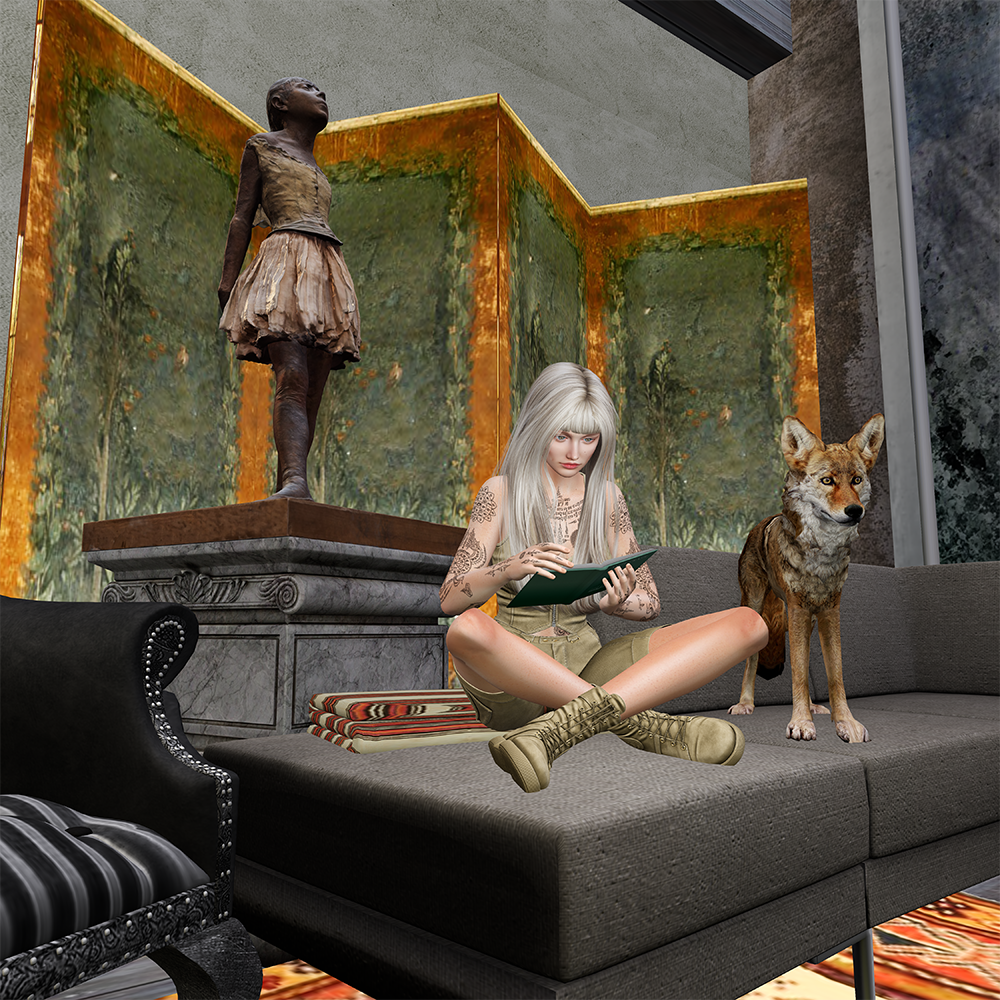
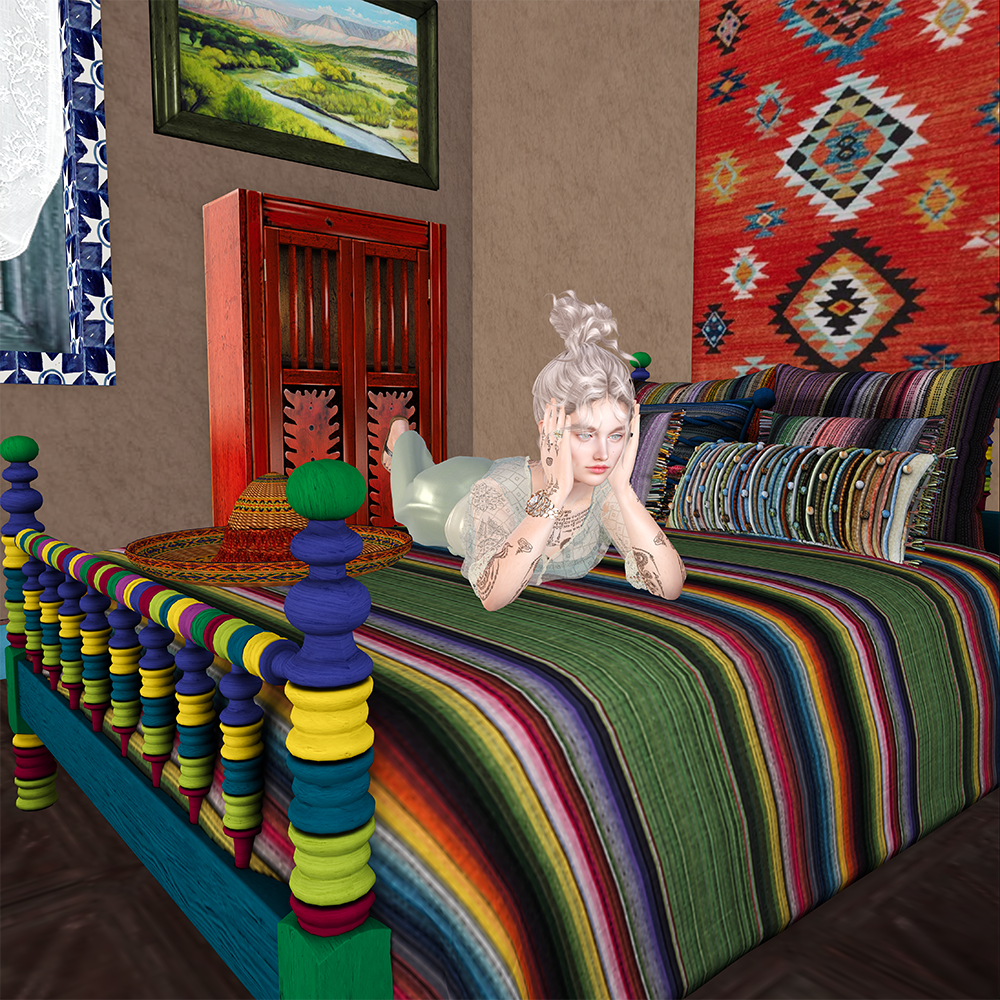
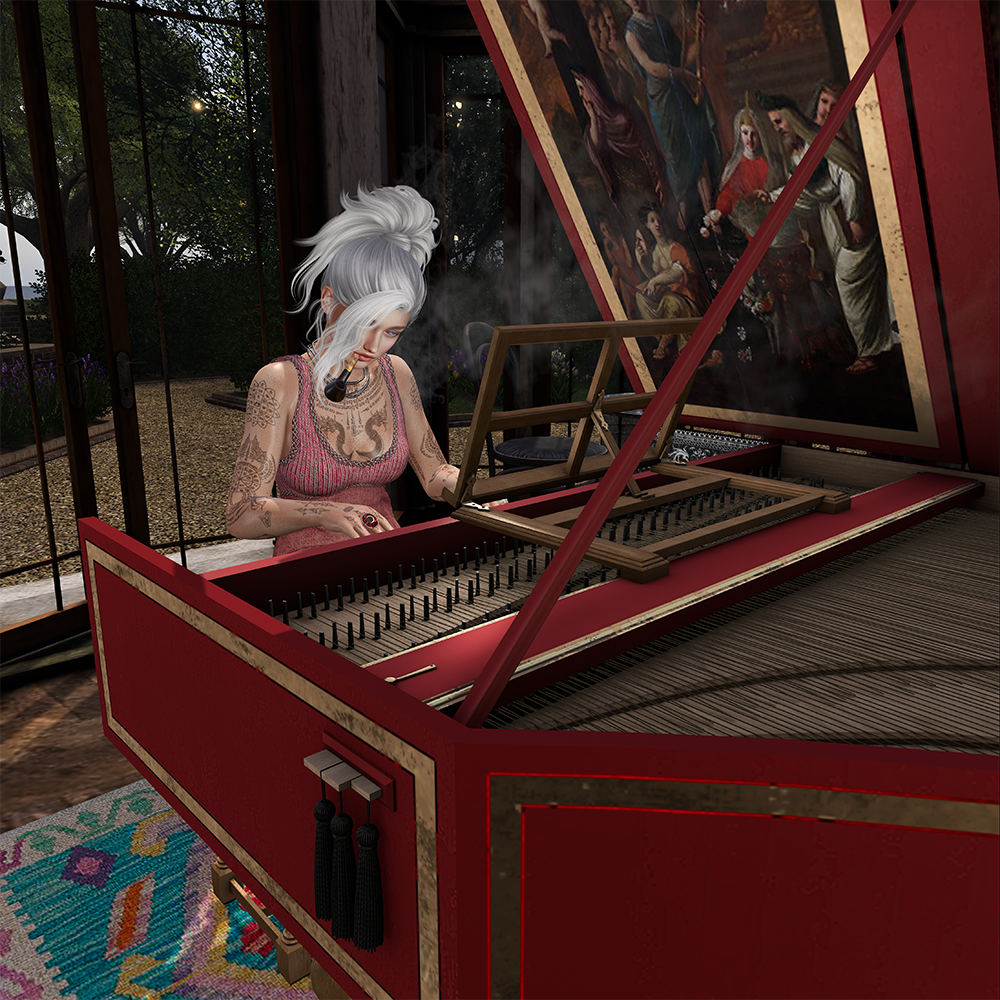
My avatar name is Hephaistos Semyorka. Together with my “real life” friend, the wildly intelligent, creative and fun-loving colleague whose avatar name is Lucida Skytower, I “own” a private island that we call Mythomorphosis. As with any virtual assets, it’s a stretch to claim ownership. But “ownership” here means we get to do exactly what we want and are able to create in accordance with our own personal aesthetic, and our sense of texture, color, light and elegance is gloriously harmonious. We each have half the island (and the sky above it) to do exactly what we please.
Truly, the best part is the people. I have friends from all over the place I’ve never met IRL (“in real life”) but have deep relationships with. And, some I have met IRL after developing deep virtual friendships. I treasure them all.
Avatar and Identity
You may have heard that people love to experiment with their avatars, and that they get very attached to their virtual identities and appearances. The experiences available through an avatar are surprisingly rich. Players identify with the avatars they create. This would be fascinating to research in depth. Most choices in Second Life with regard to how avatars are formed and skinned present very youthful visages and physiognomies. But content creators are continually finding new ways to re-form and re-image virtual bodies, and some are experimenting with increasingly diverse body morphologies. Of course, the Furries have alwaays been with us, amen!
It’s not that youth is the point, at least not for anyone I’ve talked with in the course of nearly two decades as a citizen of this particular virtual world. Even in real life, the questions I have asked over a lifetime suggest to me that most people over the age of 30 form an internal image that hovers around that self-image that persists in one’s subconscious, emerging in dreams and reveries: what one’s preferences were, one’s values, one’s enthusiasms, and how one looked in the mirror or how one most wished to, persist in an internalized imaginarium. What both was and is aesthetically and energetically significant is so often reflected in how the avatar presents, and very often this includes impressions of real life physical attributes like hair and skin colors, girth and height, even gestures, and certainly clothing (or lack of it) and other attributes. All of which, by the way, can be changed completely at any time with a few keystrokes. For others, the freedom of virtual life opens up any possibility for experimentation, however wild; and this for many includes fantasized and very often imaginatively sexualized presentations and gender morphing at will. It is of course possible to track trends in fashion; whether in clothes or body morphology. Endlessly amazing, to say the least.
I love to play dress-up, and Second Life has been my pennies-on-the-dollar retail therapy, and the clothes closet can be immense (which also includes body and face attributes). For me, this has always been a site for imaginal exploration. Translation: it’s fun!
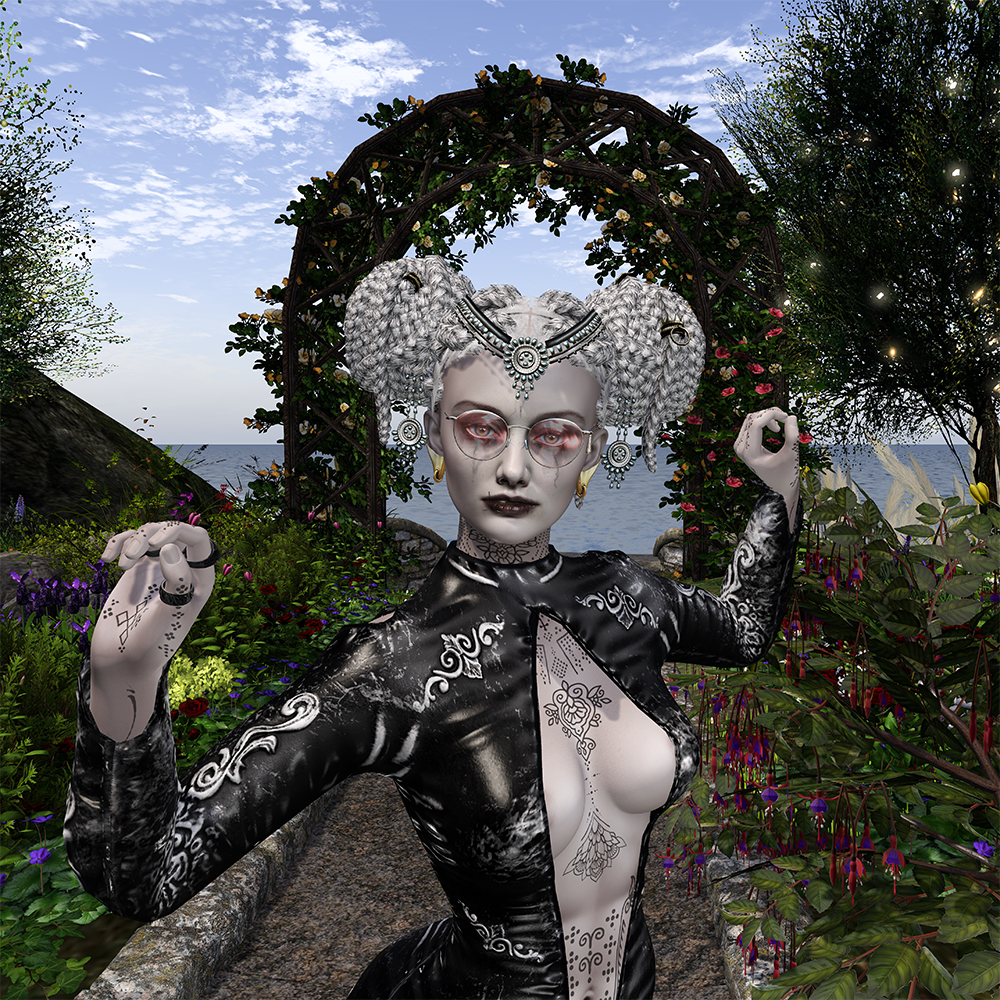
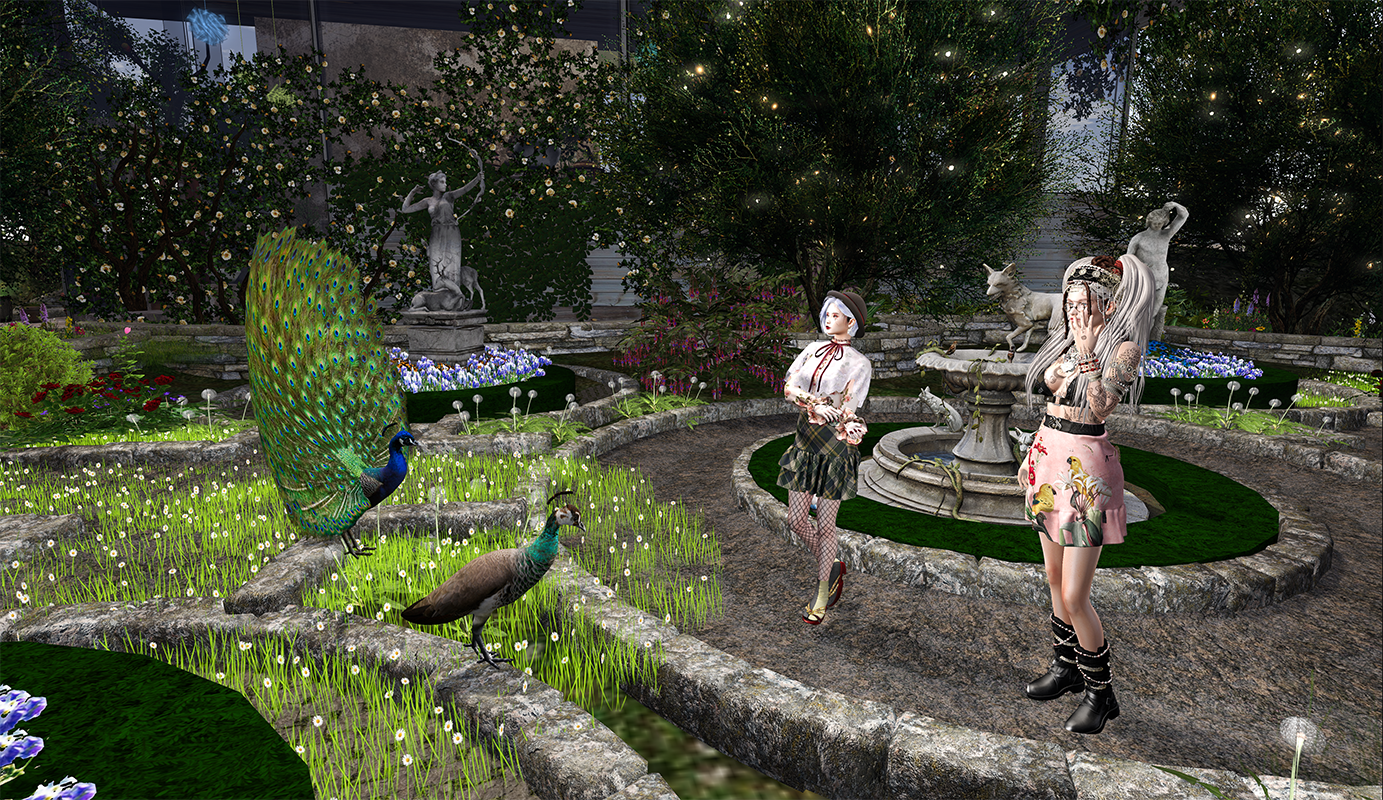
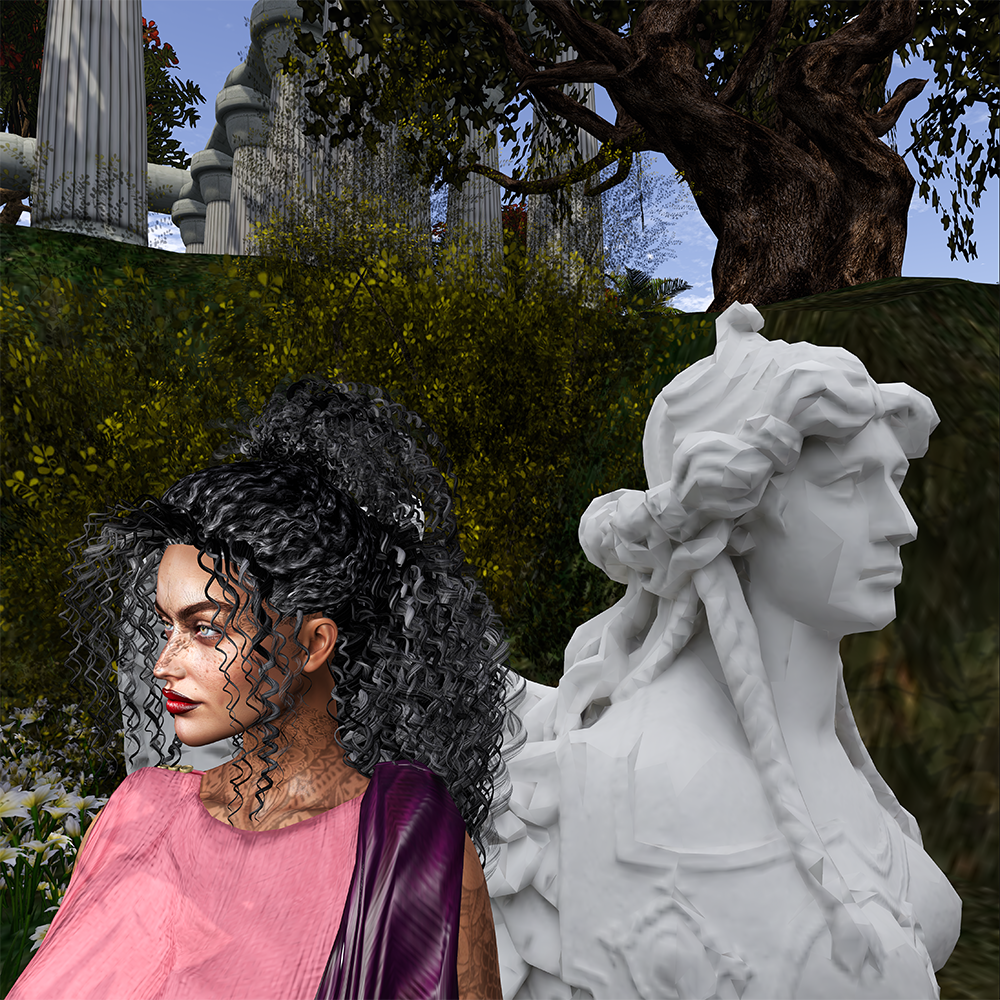
Hephaistos Semyorka (“Heph”) in the formal garden at Mythomorphosis
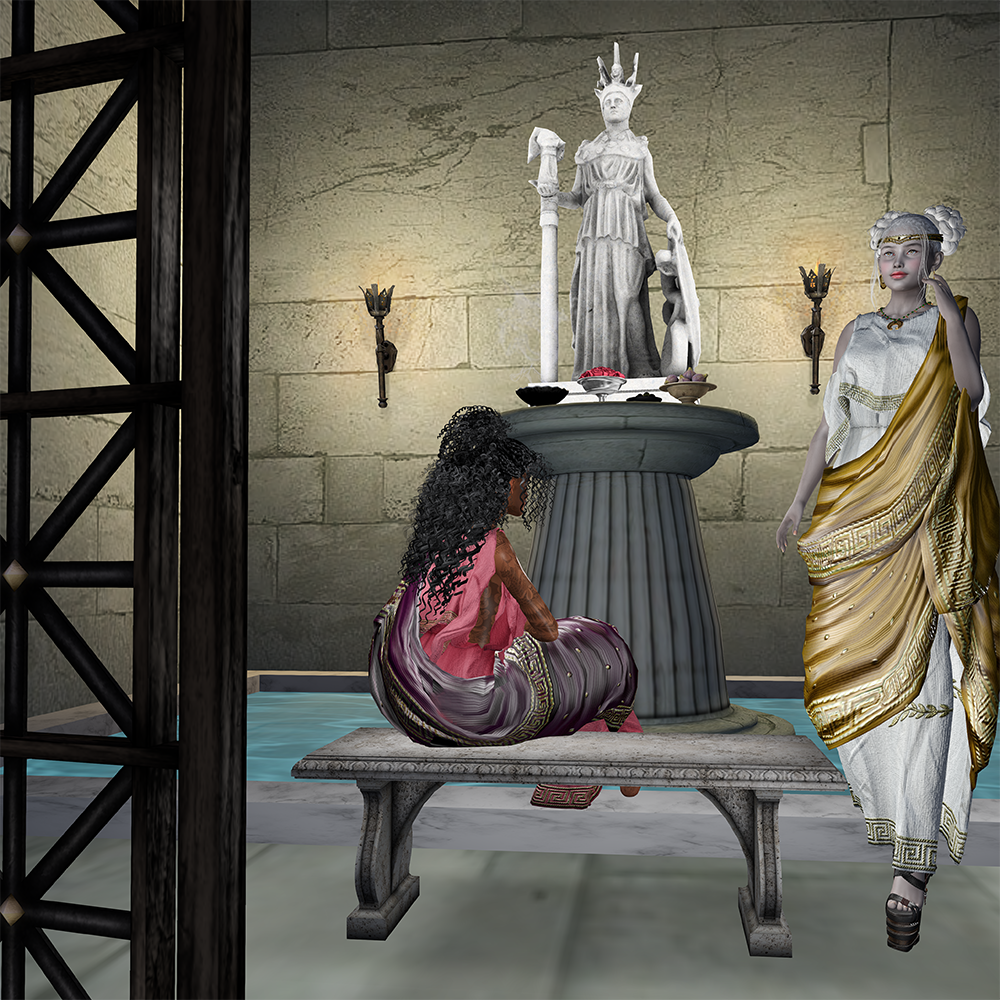
Second Life has always been a wonderful place for me to see my artwork at scale, in galleries I have built to house it (using the range of solid forms, tools and texturing options directly available inworld). My project to re-paint the “Ten Largest” paintings by Hilma af Klint was an effort to understand her process and intent (and indeed I learned a great deal I would not have seen only by standing in a gallery looking). I did this in my sketchbooks, at 1:10 scale, but in Second Life I was able to mount the small re-paintings at life size (these ten paintings by af Klint are each 10 feet tall in real life). Since 2015 I have made 150 small portrait drawings of women of significance, that I am able to mount as a collection in a gallery I built for them at Mythomorphosis. Since 2022 folloring the murder of Mahsa Amini while she was in custody of state security agents in Iran, I have made portraits of Iranian women important in the Woman-Life-Freedom movement, whether through activism or martyrdom, in most cases never envisioned as the outcome by the women who so passionately risked all for what is simple and right. In the room pictured below on the right, I met in virtual space with my dear friend and sometime co-creator, Mahmood Karimi-Hakak, to talk together about the import of this movement for the people of Iran and women and men worldwide seeking the freedom to live a life free from authoritarian psychological pressure, physical and social constraint, and all too often, deadly violence.
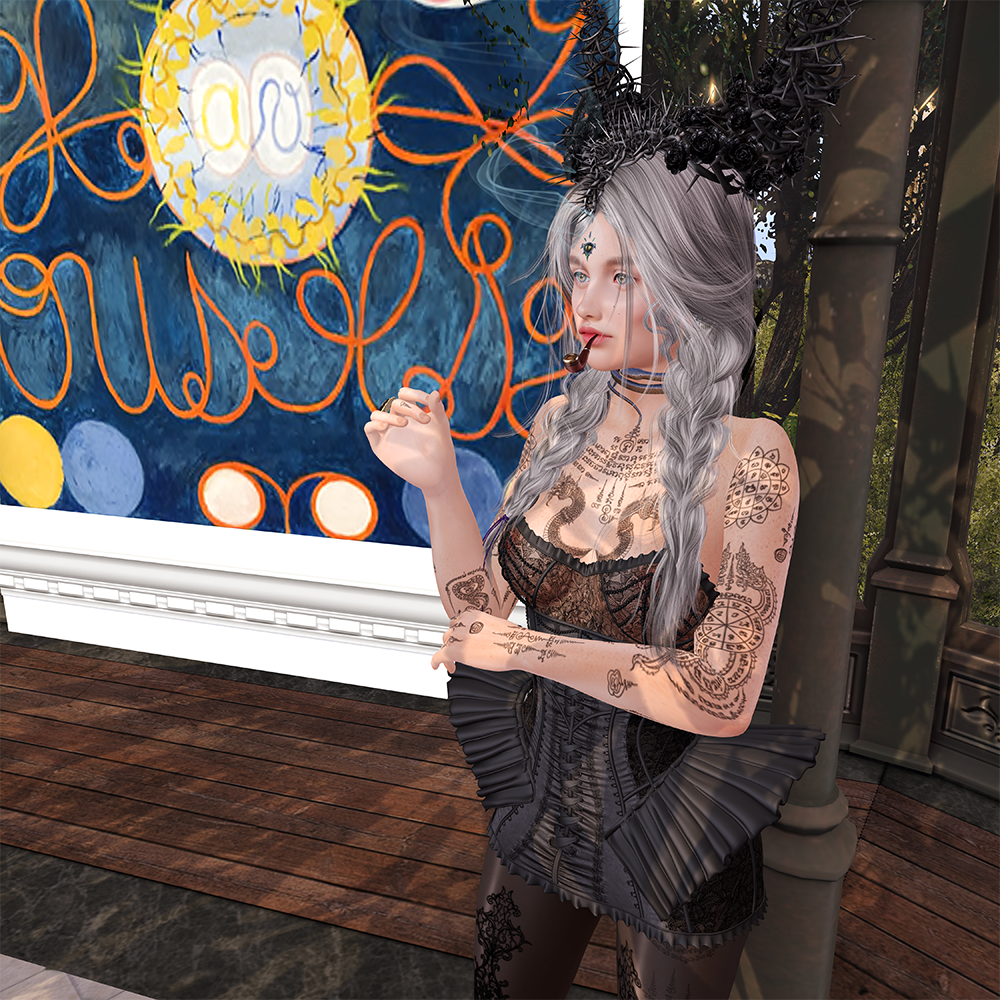
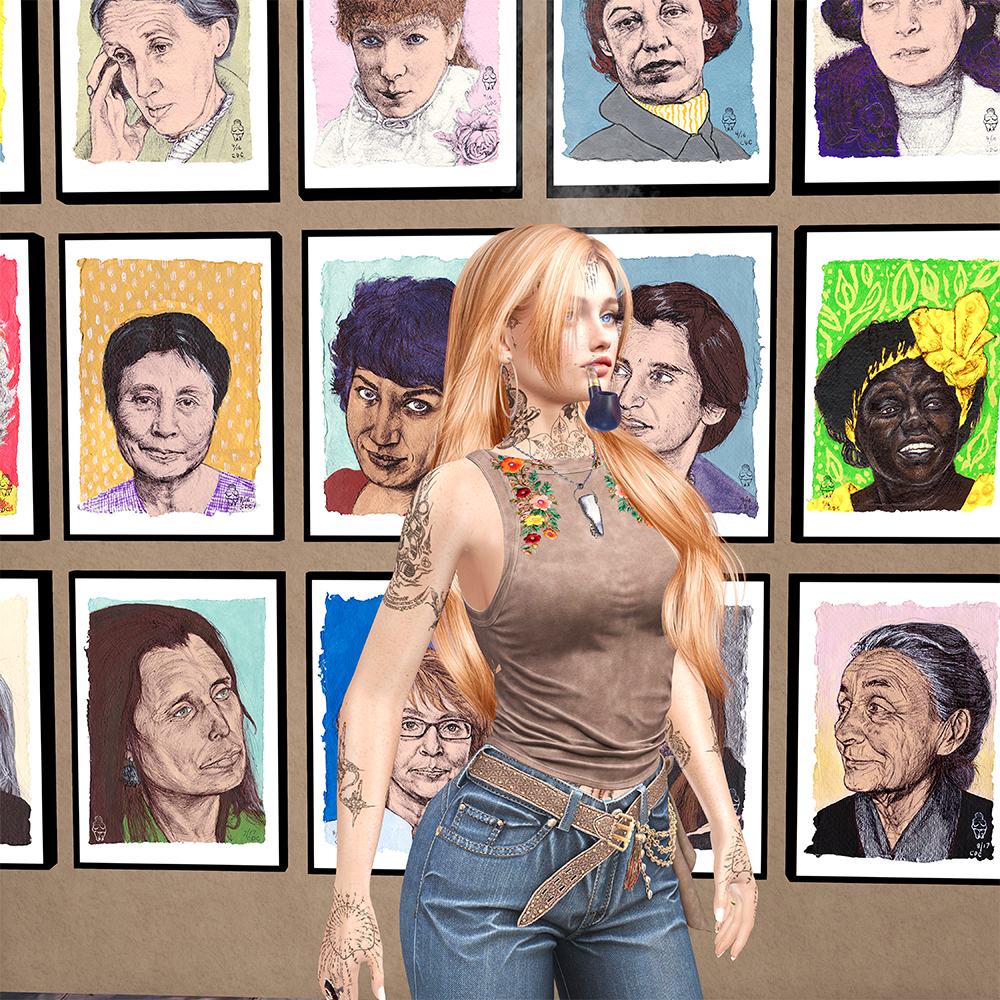
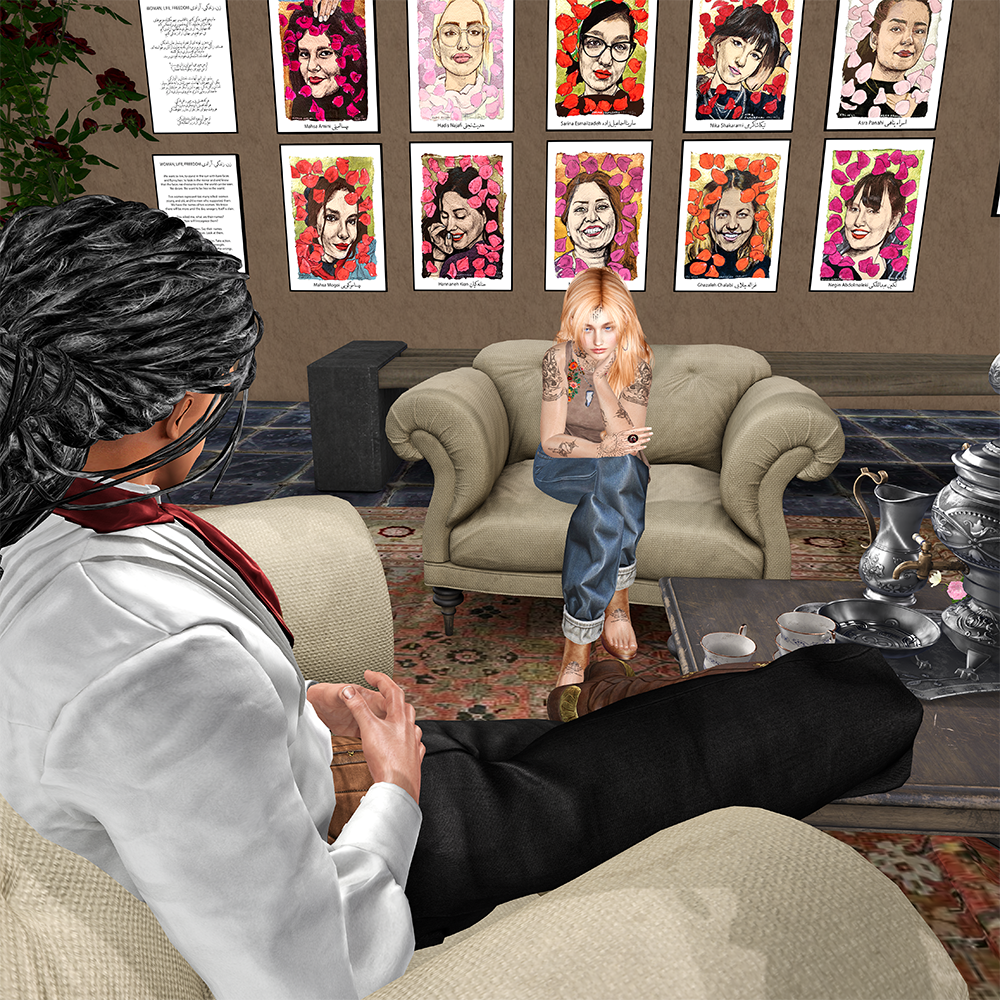

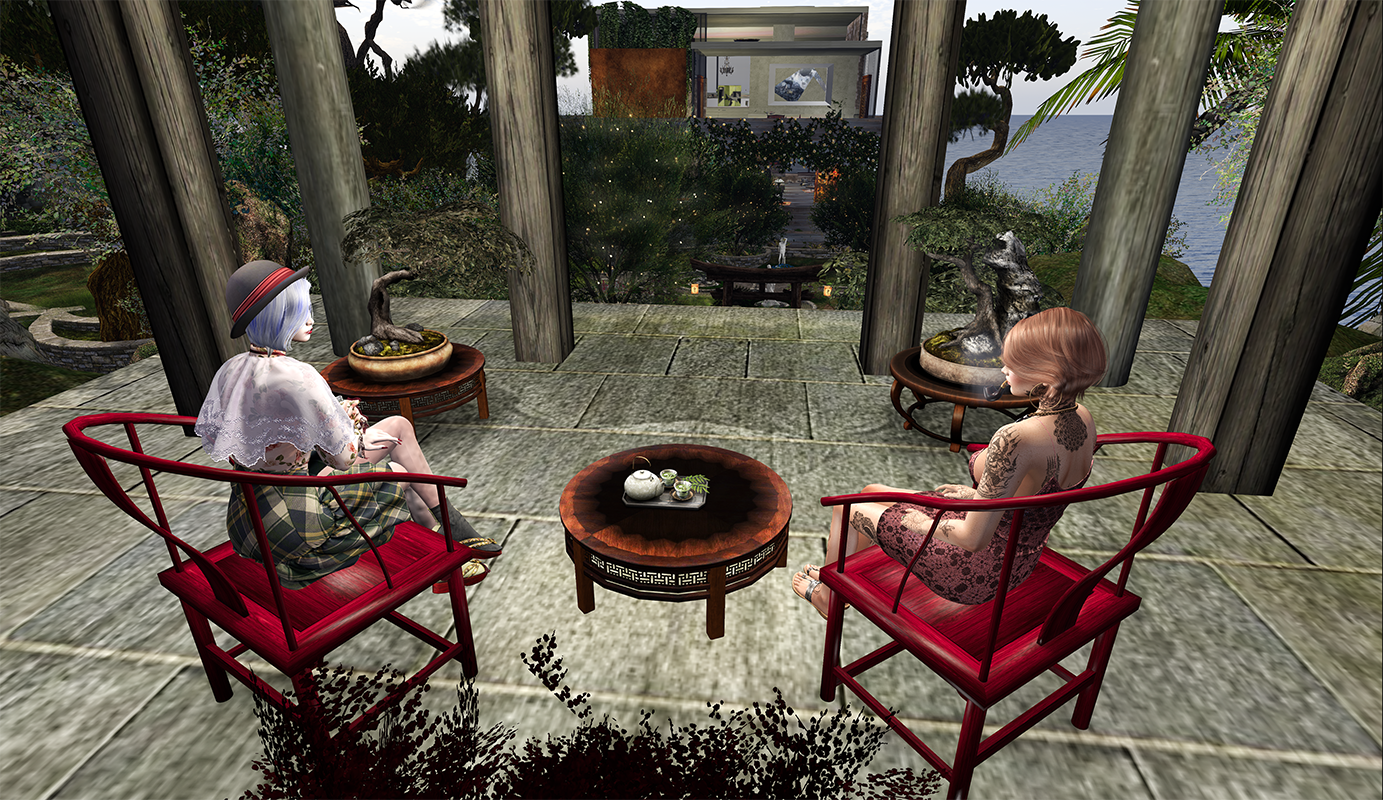
Over the years, uilding in Second Life has taught me a lot about moving from drawing and painting to begin to understand how to make sculpture: I can live in 3D. Having “properties” over the years In Second Life that bordered neighbors gave me a lot of practice in making my own home zones aesthetically pleasing and finding ways that were both creative and neighborly to achieve it. This greatly increased my sensitivity to how something looks from all 360 degrees. I have always tried to create harmonious, seamlessly flowing environments. Since an avatar is able to walk them and to see for distances, it only makes sense.
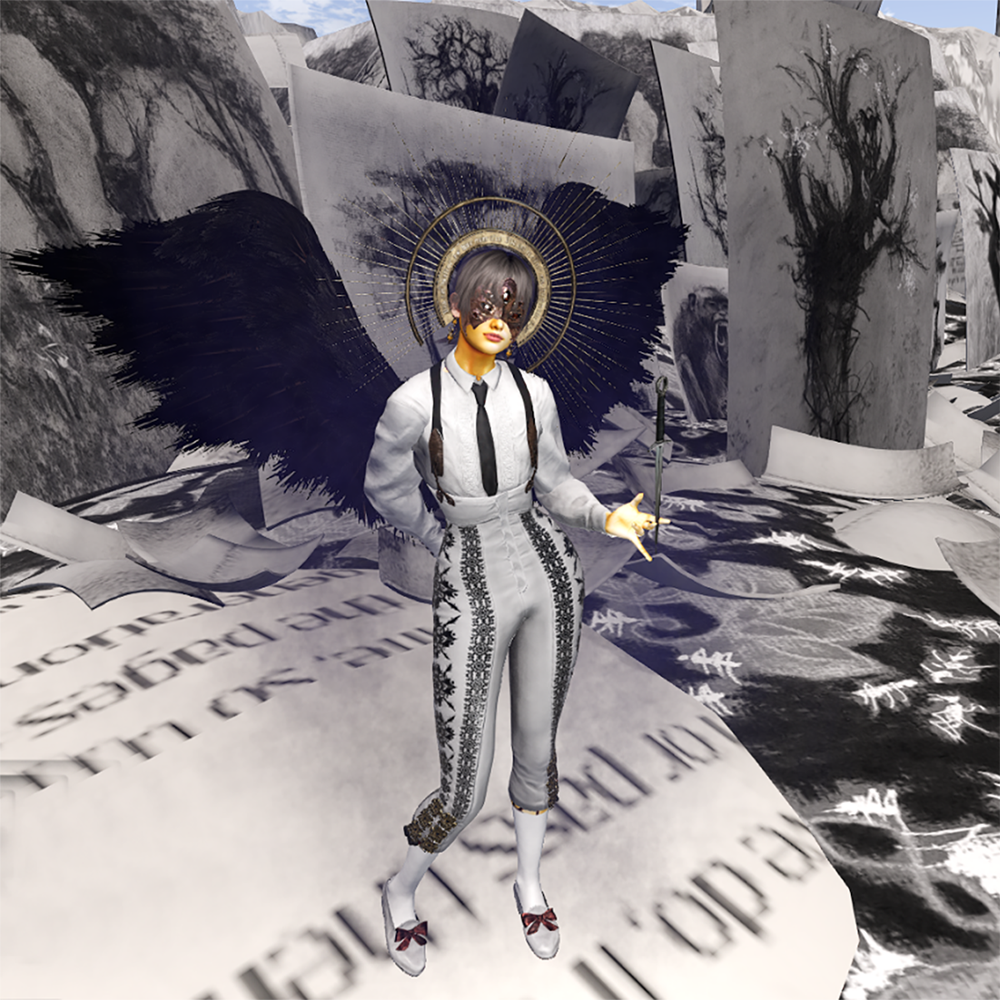
It’s fun to mount friends’ art at Mythomorphosis, especially since it can be experienced at scale for avatars. Here are some installation shots of a special gallery devoted to early cyanotypes by Sheila Pinkel. This is work that Sheila made between 1974 and 1977 (the period when our lifelong friendship began). Sheila’s long and innovative career spans experimental light studies, socially-engaged documentary projects, and public art. Her work has been exhibited extensively since the late 1970s and is held in the collections of numerous institutions, including the Los Angeles County Museum of Art; the Museum of Modern Art and the Metropolitan Museum of Art in New York, the Musée National d’Art Moderne / Centre Pompidou, Paris and many others. In the last several years Sheila has had four solo exhibitions at Higher Pictures in Brooklyn, NY. She lives and works in Los Angeles, in the company of her two cats, Chaos and Entropy.
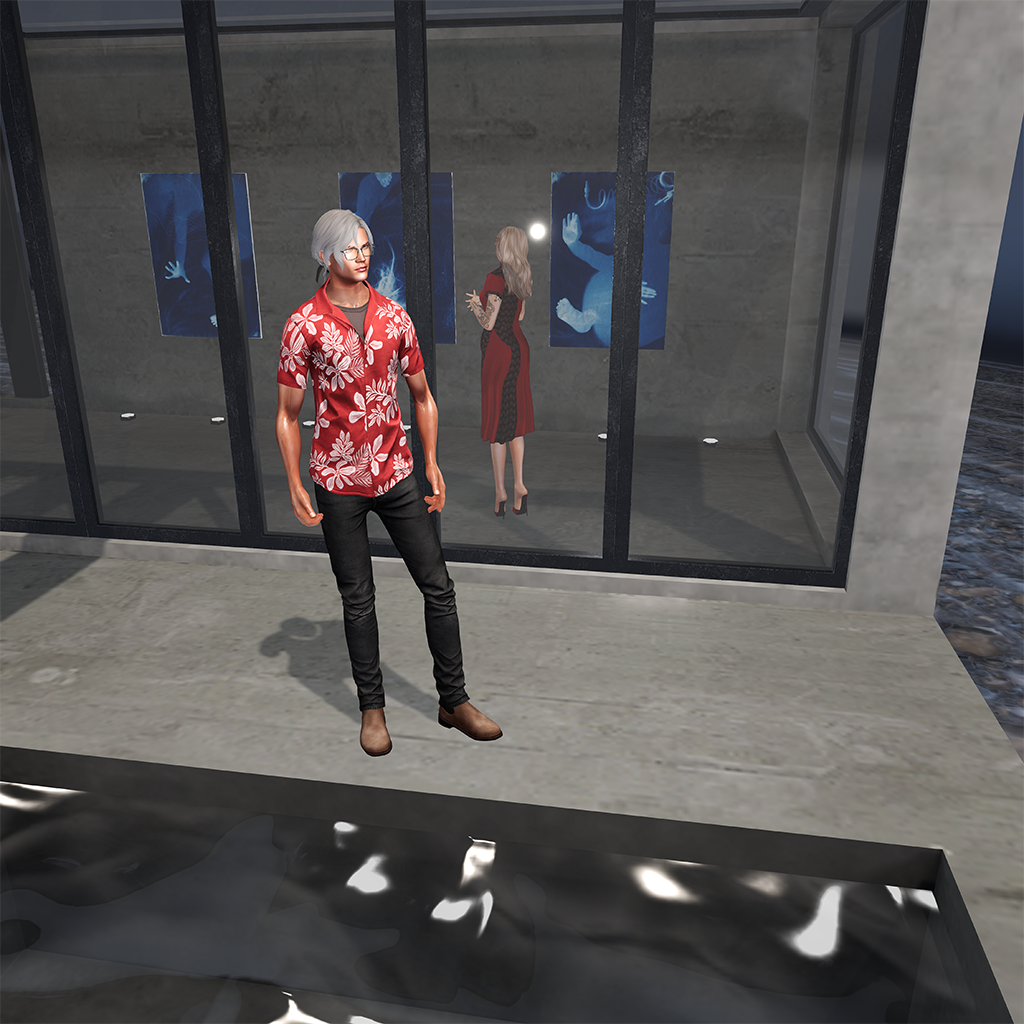
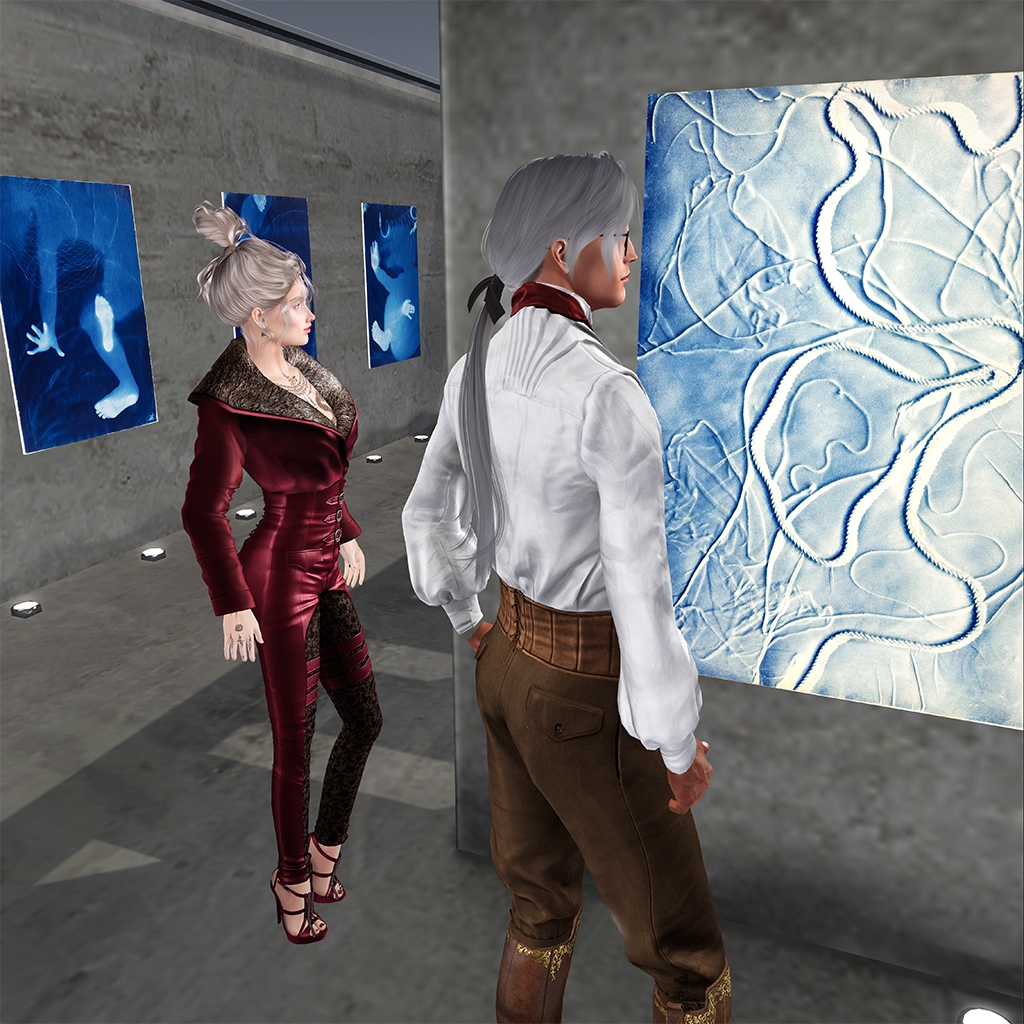
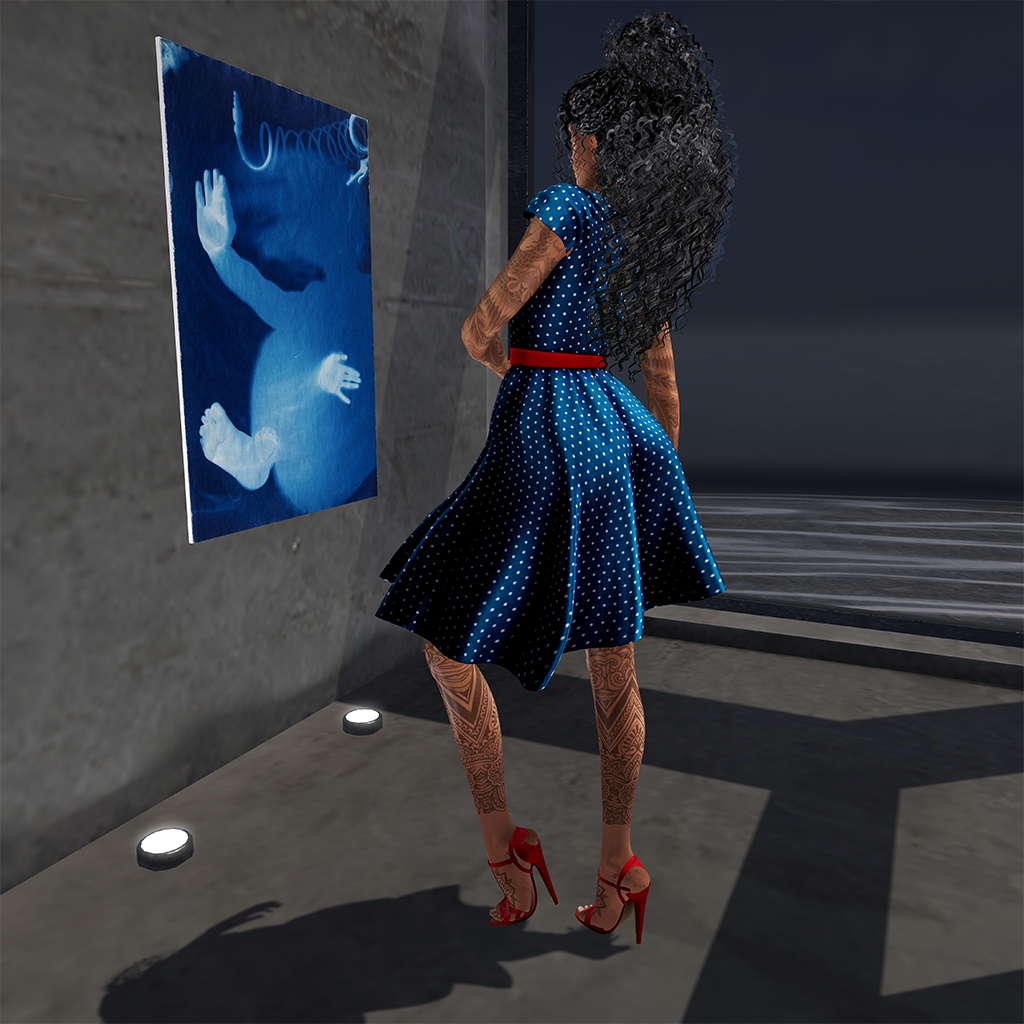
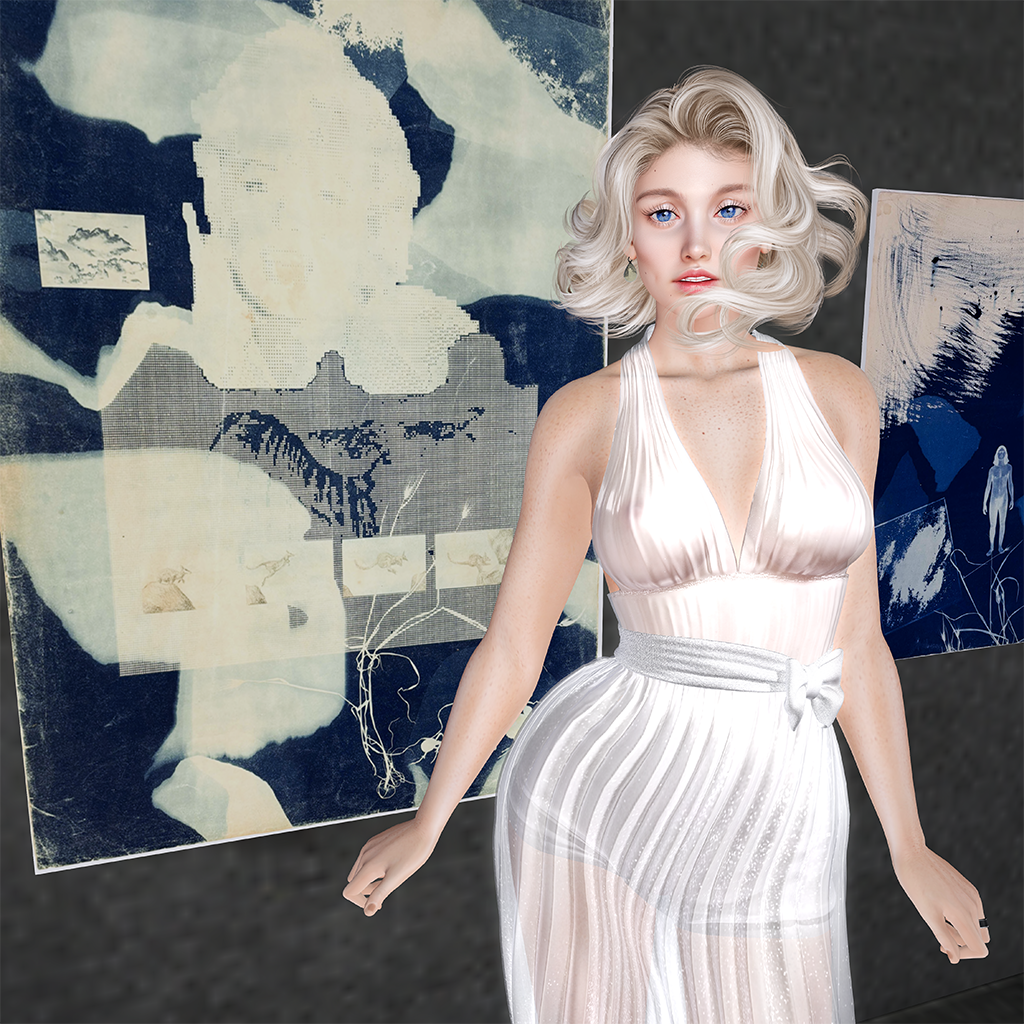
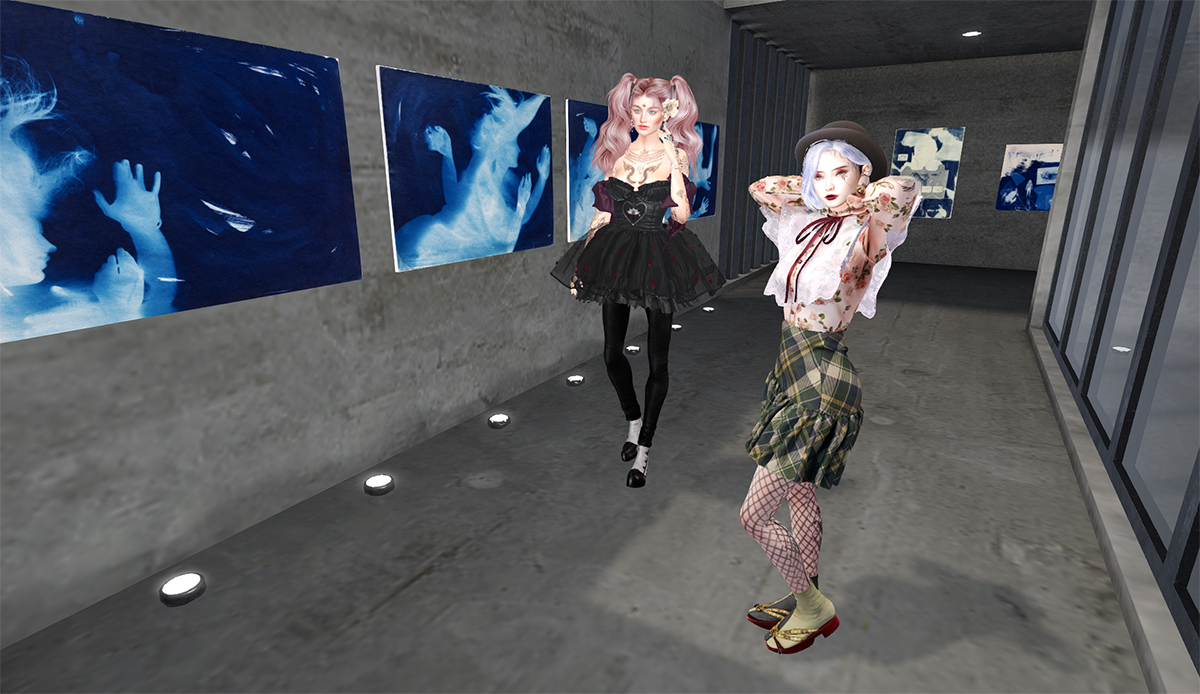
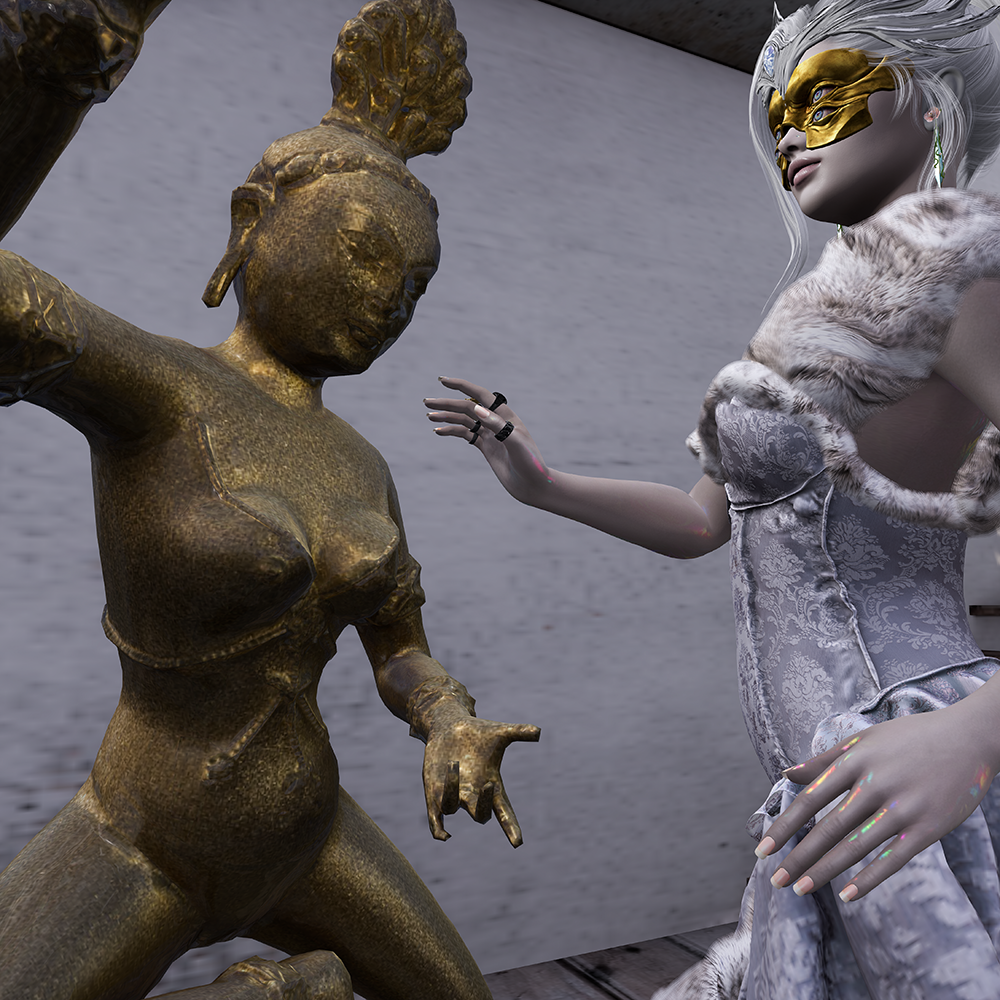
Daedala and Heph vogueing at Sheiia’s beautiful exhibition
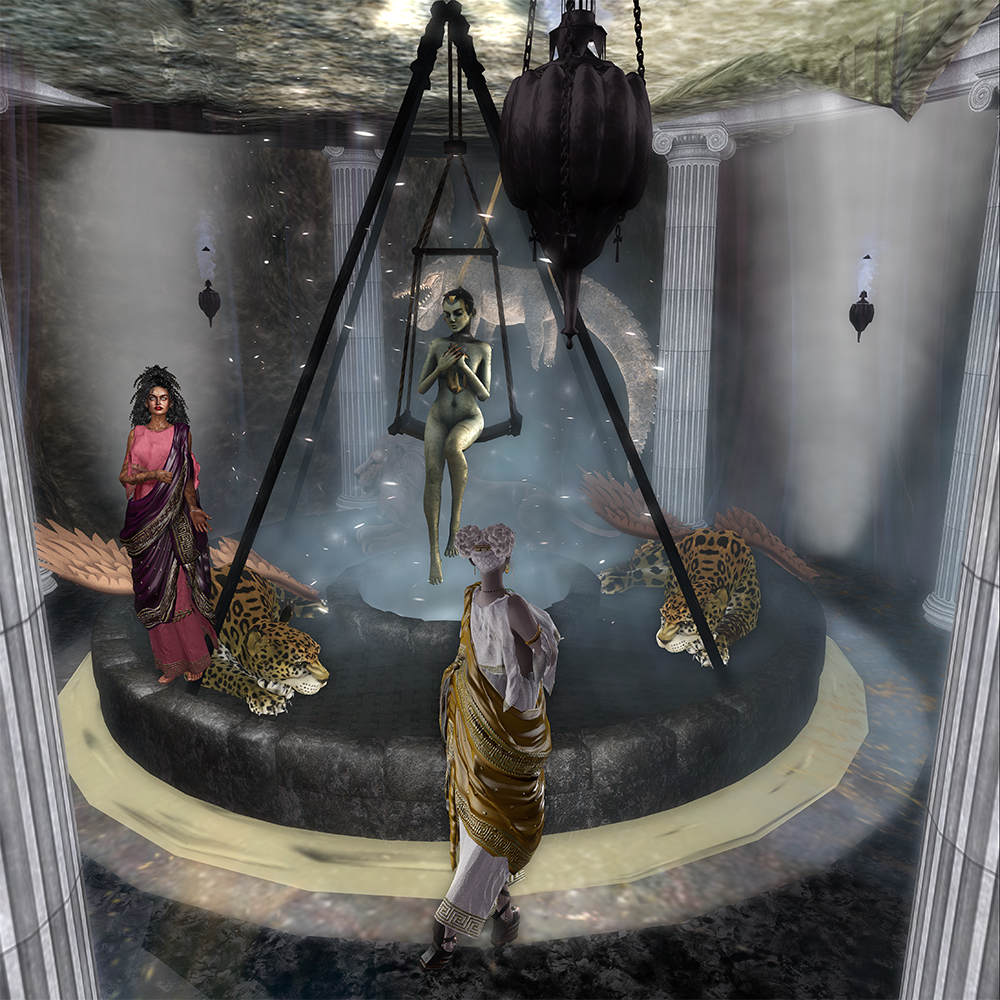
True to its name, Mythomorphosis is a place for exploring myth and ritual, fancy and fantasy. Inhabiting an embodied avatar which can create and move within spaces that reflect aspects of real world physics (for example, avatars cast shadows) opens up vast aesthetic possibilities. I find the surreal quality of it irresitble. Still, while I persevere in most-highly valuing what I think of as “analog art;” the freedom, enjoyment, and ability to create, even within the current constraints of the virtual reality that is available to me, is more than worth the time I allow myself to be enmeshed in its enchantments. As an introvert, I revel in the ability to transform a domain that effectively belongs to me. Though I spend a lot of time here alone, just exploring, musing, building, re-building, over the past two decades as a citizen in these spaces I have also been relationally queried, nourished, challenged, informed and inspired. I cherish the longstanding relationships with people I would not likely have encountered in any other way or interacted with in quite this incomparably magical way.

Anyone who knows me knows that Dia de Muertos is the most important holiday of my year. What’s especially sweet is that our family and many of our close friends seem for the most part to agree, and we have spent more time together on that holiday than any other.
Dia de Muertos combines a lot of things: memory and reflection, taking a pause to consider life and death and to call to mind people we want to miss. It’s also social and artful, and full of delight (and, at our house, great food). It’s a good time to remember we are all human.

Here are a few images from this year. It has been a rough year, following some of the hardest years many of us can ever remember having lived through, barring the personal calamities the flesh is heir to. The world is forever in ferment, but the pressing challenge of climate change and the specter of climate disaster is only one of the malaises, which literally include our global pandemic, that we are reminded of daily by our all too comprehensive immersion in the internet. What may have been all but invisible in times past is all too visible now, and we face daily trauma from having the violence that has gone on since time immemorial put into our faces every day. We cannot turn away, and we must not turn away, especially when the political and human stakes are so high.
I have been following events unfolding in Iran since the murder in September by “morality police” of a young Kurdish-Iranian woman whose name is Mahsa (or Zhina) Amini. Reports of her death sparked ongoing demonstrations against compulsory hijab, but more deeply and persistently, against institutionalized misogyny and the truly, inhumanly savage violence of a theocratic state against its people. I have been busy drawing portraits of women killed and detained, and in the traditional way, I have placed their images on my Dia de Muertos altar at Mythomorphosis, as well as at home IRL this year. In honoring these women—and too the men who stand beside them in danger—I am forced to reflect on the danger that my own country, the US, faces with a Supreme Court majority who are openly committed to a state-mandated, fundamentalist, merciless, cynically perverted theocracy. My Iranian friends especially know how deadly that prospect is. What better time, in our US election year, on a day which occurs close to Dia de Muertos, to reflect on our human vulnerability—and to stand for what we believe in. I believe in the right of all people to have the freedom to seek meaning and happiness in life; and to live by our best instincts in sharing life’s gifts with others. As an American, I believe it is the power of our democracy to give all a voice, and to mandate the social conditions for dignity and to fulfill the most basic needs of life. That death stands so near to us means very different things to different people; but to all of us it must mean that in our shared mortality we too share our humanity. That’s what I’m reflecting on in this very solemn and portentous year.

2022 Ofrenda at Mythomorphosis

Campo Dia de Muertos at Mythomorphosis